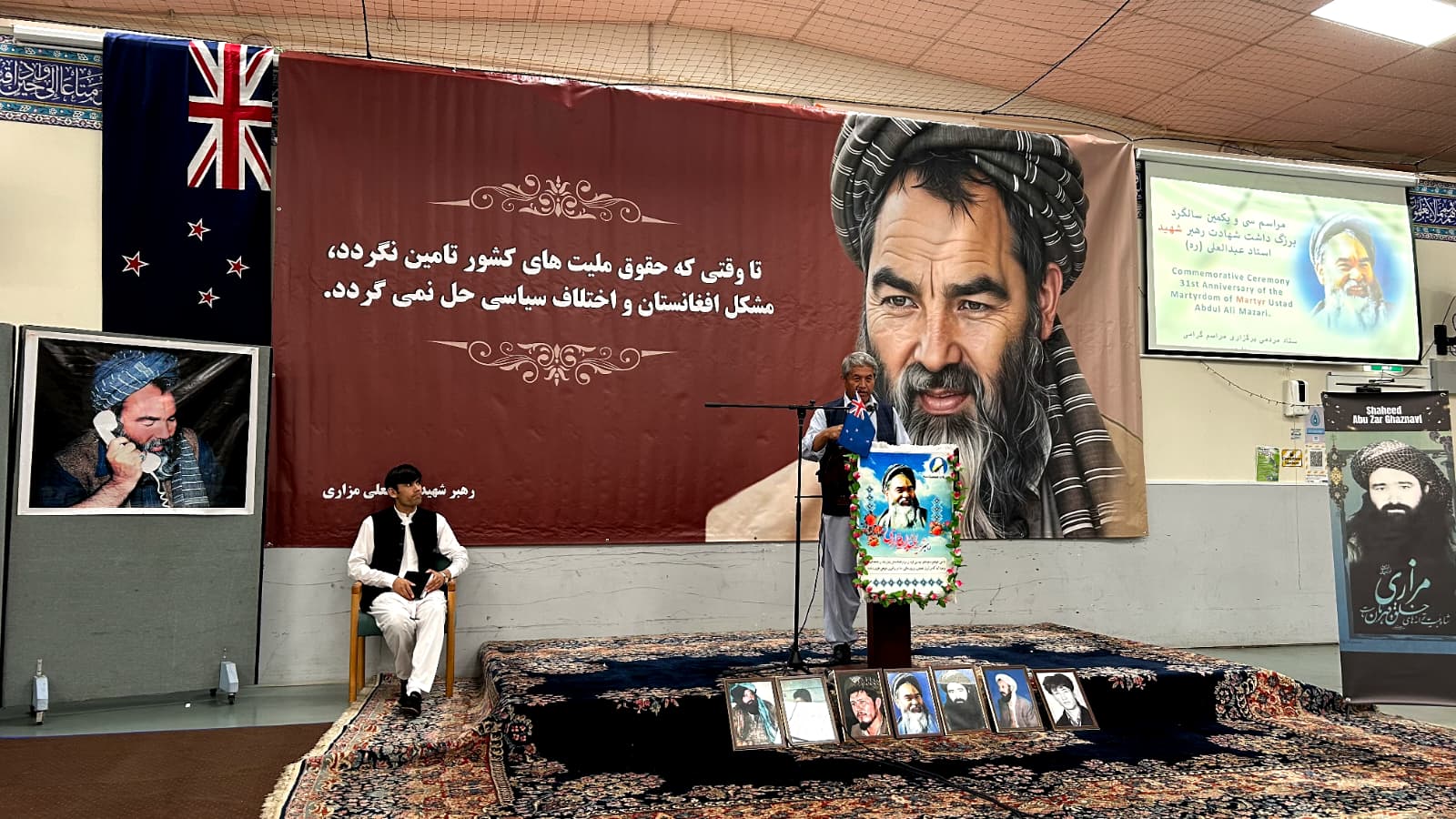
In today’s global instability, declining trust in political institutions and uncertainty about the future, remembering the leadership lessons of Shaheed Abdul Ali Mazari becomes a political and moral necessity. He not only championed national unity but was also a strong advocate for collective dignity and fair representation of all. His life as a political leader symbolizes a commitment to justice that transcends ethnicity and sectarianism. And he remains the symbol of not only resistance but also of hope and higher purpose.
I’m not a political analysist nor do I have specialized knowledge of the historical events that made Abdul Ali Mazari, the Baba of Hazaras. However, I’ve learned and strongly believe that Mazari’s vision_peaceful coexistence of ethnic groups_offers a unifying moral compass. He lost his life for political resistance against the unjust oppression and institutional bias against the minorities. He stood for us at a time when Afghanistan faced ethnic fragmentation, political instability and ongoing battle for power. Hence, today’s Hazaras must understand the sacrifices of Mazari and his companions not as stories but as lessons of courage, inclusive leadership and resilience.
New Zealand has almost 5.3 million population and Hazaras are relatively a minor fraction of this small country. Most of Hazaras living in Auckland and Hamilton are new settlers with minimum resources but higher enthusiasm to commemorate the unwavering legacy of Baba Mazari and his fellowship. It’s not just a cultural ritual but our social responsibility to remember the most important chapter of our history and identity. This year’s event was concise, focused and more inclusive. However, I greatly felt the absence of Hazaras from academia, business and those active on social media. Beyond any doubt, everyone has professional & family commitments, different creative ideas and political ideology especially living at this critical time. Participation of wider communities becomes imperative to preserve the enduring principles of unity, cultural pride and political awareness. Just for one day, we should keep our differences aside for educating younger generation that our struggle as a nation has been excruciating. Only then they gain a deeper appreciation for Mazari’s legacy, the freedom many communities struggle to secure and our identity as a proud nation. Our unity will nurture a generation of Hazara/ global leaders guided by the values of transparency and inclusive governance.
Commemorating Mazari’s martyrdom serves a moment of reflection and strengthening our unity. Such events should bring people from diverse backgrounds together reaffirming a shared bond of our identity. Younger Hazaras grow with minimal exposure to historical and political realities of Afghanistan. These cultural events create a space where they learn about the struggles of their ancestors, their heritage and develop pride in our identity as Hazaras. The sacrifice of Mazari is not just a chapter of our history, it’s a message of resilience, political awareness and cultural pride. Our participation honours the sacrifice of those who fought for us while reminding present and future generations that true national unity emerges through mutual respect and coalition-building.

History lessons show that great leaders are remembered for their selfless sacrifices not personal pursuits. Mazari’s life continues to resonate among political leaders whose mission is the establishment of fair political system and unified social structures. The leaders in Hazara community and beyond have a tough responsibility given the increasing polarization and ethnic tensions. Mazari challenged marginalization and advocated for recognition of all stakeholders in such polarized political landscape, so how can we not create such an environment? I fear a sense of ‘disconnect’ among younger generation with the struggles that shaped our national pride. Older generation/ leaders play a pivotal role to cultivate a sense of solidarity, political awareness and inclusive community engagement among younger generation. This is not an advice but an honest reflection from a Hazara to our leaders/ elders.
Remembering our founding fathers creates a bridge between past and present. It’s a manifestation of our diversity helping guide the future of our future generations who seek a more inclusive and unified society. Like Baba Mazari’s leadership legacy that ‘leader is not defined by power but by service to his community’, so should the message of our current leaders be. During this year’s event, the speakers emphasized on the importance of a just leadership in today’s complexed environment. Baba Mazari’s life has striking parallels to other global leaders like Nelson Mandela or Martin Luther King Jr. who dedicated their lives for political representation for marginalized communities. They all emphasized on equality and collective dignity through conversation and open mindedness. These global leaders are known for their transformational leadership attributes and Baba Mazari transformed our identity as a proud Hazara nation/ ethnicity in the world. And we need such leadership examples to fill the vacuum of current political landscape.

The legacy of Shaheed Abdul Ali Mazari holds a profound relevance to today’s political situation. His sacrifice is more than a story, it’s an ongoing call for solidarity and unifying leadership. Remembering his martyrdom nurtures collective memory and preserves his message reaching to our younger generations and global audiences. Mazari reminds us that great leaders remain the most powerful force in building their nation.
Jawad Jahid
March 2026

Leave a Reply